Connectivity Challenges Uplink is Solving with Decentralization
The Connectivity Gap
The internet powers nearly every part of modern life, but still, billions of people worldwide lack reliable connection in rural regions. Traditional telecom models focus on high-return urban areas, leaving everyone else behind. Infrastructure is costly and slow to deploy, which only widens the digital divide.
Uplink offers a different approach. By allowing anyone with a Wi-Fi router to join the ecosystem, share unused bandwidth, and earn rewards, Uplink transforms everyday devices into part of a global connectivity grid. This community-driven model dramatically lowers the barriers to access and helps expand internet coverage everywhere it’s needed.
Problems Uplink is Solving
- The Complexity of Network Management
- The Cost of Infrastructure Deployment
- The Problem of Interoperability
- The Incentive Gap
The Complexity of Network Management
Most people don’t think about how complex internet connectivity really is and for large companies and institutions, it’s a constant headache that costs time and money. Every corporate office, business, or store often uses different service providers, platforms, and authentication systems, which makes scaling networks costly and time consuming. Roaming between networks can be unreliable, and billing or settlements between providers are slow, manual, and error-prone.
For executives, this isn’t just an IT issue, it’s a growth problem.
Network complexity creates inefficiencies, drives up costs, slows expansion into new regions, and leaves organizations stuck with rigid vendor contracts. Without a smarter, more automated way to manage connectivity, companies risk falling behind competitors that can scale faster and operate more efficiently.
Uplink solves this by bringing everything under one roof with an integrated, decentralized platform:
- Identity Provider (IDP): Simplifies authentication for entire fleets of devices.
- Access Network Provider (ANP): Gives providers full visibility into infrastructure and 24/7 support access.
- Identity and Access Management (IAM): Lets organizations control accounts, manage permissions, and security from a single, secure dashboard.
Add in automated roaming, real-time settlements, plus flexible billing models, and what was once a tangled, costly process becomes simple, efficient, and scalable.
The Cost of Infrastructure Deployment
Traditional telecom economics are not built for speed, efficiency or the scalability that recent innovations require. Expanding networks often requires massive upfront investment, which slows deployment and limits growth to only the most profitable areas. This leaves high-demand regions underserved and stifles opportunities for innovation.
Uplink addresses this with surge mapping and coverage tools that identify where demand is highest in real time. Providers can then deploy infrastructure precisely where it’s needed, reducing waste and accelerating return on investment. This demand-driven approach ensures networks expand intelligently, meeting actual user needs instead of relying on outdated deployment models.

The Problem of Interoperability
In today’s system, devices, protocols, and networks often don’t work well together. For enterprises, this means being locked into a single vendor, higher costs, and less flexibility to adapt. It can slow expansion, limit innovation, and reduce customer satisfaction.
Uplink’s ecosystem is designed to be protocol-agnostic, supporting multiple devices and radio technologies under one platform. This open, flexible approach eliminates vendor lock-in and lowers costs such as building new infrastructure and billing & settlements. Our network integration also ensures that users can connect seamlessly from almost anywhere in the world!
The Incentive Gap
One of the biggest flaws in the traditional telecom model is the lack of incentives for communities to participate in expanding connectivity. Growth is driven almost exclusively by large operators, with little benefit trickling down to individuals or local communities.
Uplink flips this dynamic.
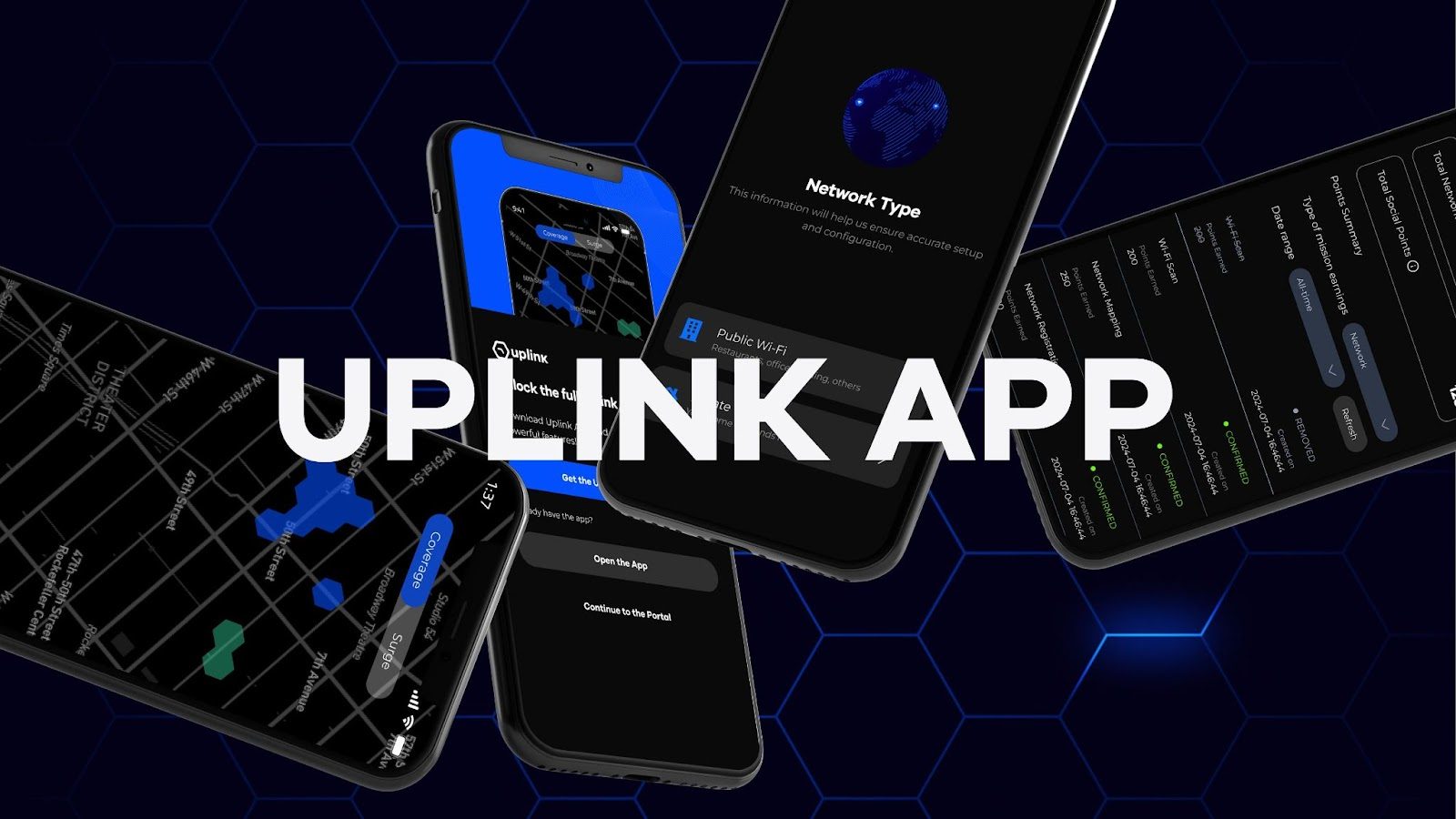
With the Uplink App, users can earn rewards simply by contributing bandwidth or deploying infrastructure. This incentive model empowers individuals and communities to take an active role in growing the network while benefiting. In turn, the ecosystem expands faster, more sustainably, and with stronger participation.
Building a Decentralized Future
Taken together, these solutions position Uplink as more than just another connectivity platform. It delivers secure, carrier-grade internet access, simplifies network management for enterprises, reduces infrastructure costs, removes vendor lock-in, and rewards communities for contributing to growth.
From underserved neighborhoods to Telcos and Fortune 500 companies, Uplink is solving the fundamental problems that hold global connectivity back. Its decentralized, community-powered model is creating a smarter, more inclusive, and more resilient internet.
Expanding internet access—everywhere—that is the future Uplink is building.