Tokenomics Explained: Understanding the Economics of Cryptocurrencies
As we prepare for the launch of the ULX token economy, many in our community are eager to better understand how token-based ecosystems actually work. What gives a token value? How are rewards distributed? Why do some projects succeed in creating thriving, self-sustaining networks—while others collapse under the weight of inflation and speculation?
This article is designed to help early Uplink community members build a foundational understanding of tokenomics: the economic principles that govern the creation, distribution, and use of tokens in decentralized systems. Whether you’re new to Web3 or simply curious about what makes a token economy “solid,” this guide breaks it down through the lens of five well-known projects: Helium, IoTeX, DIMO, Filecoin, and Avalanche.
We’ll highlight what these projects have done well, where some struggled, and how these lessons are influencing the design of Uplink’s own ULX ecosystem.
What is Tokenomics—and Why Does It Matter?
Tokenomics (short for token economics) is the framework that defines how a cryptocurrency works within a given ecosystem. It includes:
- Supply mechanics: How many tokens exist? Are they inflationary, deflationary, or capped?
- Utility: What can users do with the token? Is it used for payments, access, staking, or governance?
- Incentives: How are users, validators, or participants rewarded?
- Distribution: Who gets tokens—and when? Are insiders vesting over time, or are emissions front-loaded?
A well-designed token economy should encourage long-term alignment between all stakeholders—builders, users, contributors—and ensure that the token has ongoing reasons to be used and held.
In the case of Uplink, the upcoming ULX token will play a critical role in rewarding connectivity providers, incentivizing ecosystem growth, and giving our community a real stake in the decentralized internet we’re building. To learn from others, let’s look at some leading examples.
Helium (HNT): A Pioneer in DePIN Connectivity
Helium deserves credit for pioneering the Decentralized Physical Infrastructure Network (DePIN) model, bringing real-world infrastructure on-chain and proving that crypto incentives can bootstrap physical networks. Its core idea: reward users with HNT tokens for deploying wireless hotspots and contributing to network coverage.
One of Helium’s most innovative features is its burn-and-mint equilibrium: users who want to send data over the network must buy Data Credits (DCs), which are created by burning HNT. This ties real-world usage to token scarcity and provides a demand-side counterbalance to emissions.
But Helium’s rapid growth revealed some cracks. Many early participants deployed thousands of hotspots in low-demand areas purely for rewards—not because they were improving connectivity. The reward model incentivized hardware distribution, but not necessarily network utility. Although, it's worth noting that Helium has improved much of their model since their initial launch. Uplink builds on this lesson by tightly matching coverage to demand, ensuring that incentives are aligned not just with deployment, but with meaningful usage.
Uplink also offers a software-first, enterprise-integrated, and certified platform that is built with long-term reliability in mind. Where Helium paved the way, Uplink is now advancing the model for sustainable growth and real-world utility—without overincentivizing idle infrastructure.
IoTeX (IOTX): Building the Machine Economy

IoTeX focuses on the Internet of Things (IoT), with a token economy designed to connect devices and humans in a decentralized data-sharing ecosystem. The IOTX token is used to register devices, stake for network validation, and power interactions between machines and services.
Key strengths include a burn mechanism when devices are added to the network and a staking-based reputation system for validators and delegates. IoTeX aims to give users full control over their device data and the ability to monetize it—similar in spirit to Uplink’s vision for user-owned infrastructure.
However, complexity and slow enterprise adoption have limited its scale. Despite strong mechanics, the real challenge for IoTeX has been translating its vision into tangible, demand-driven use. Tokenomics alone can’t drive growth without consistent user and enterprise engagement.
DIMO: Fair Launch and User-First Utility
DIMO’s tokenomics are refreshingly clean and transparent. Focused on connected vehicles, it rewards users for sharing driving data and building applications on top of that data. DIMO launched without private token sales—avoiding the early “VC overhang” that plagues many ecosystems.
Rewards are tied to real-world behavior, and the system requires lockups or staking for advanced roles like fleet operators, which discourages short-term farming. The biggest hurdle? Demand. While the incentives are well designed, a market for vehicle data must grow in parallel to justify long-term emissions. Still, DIMO sets a strong precedent for user-aligned, fair-launch token models—an approach Uplink similarly values.
Filecoin (FIL): Incentivizing Storage with Staking and Slashing
Filecoin tackles decentralized storage with a token economy that rewards users for providing reliable storage infrastructure. Storage providers must stake FIL tokens as collateral and face slashing if they don’t meet uptime guarantees or lose data. This creates strong accountability.
Its model is built for serious, long-term operators, not casual participants, and the token has clear utility for storage and retrieval. However, Filecoin’s early years were marked by complex token economics and speculative activity, leading to inflation outpacing real demand.
The takeaway? Strong tokenomics must be paired with simplicity and accessibility—something Uplink is prioritizing through intuitive participation paths for both individuals and enterprises.
Avalanche (AVAX): Deflation and Demand via Subnets
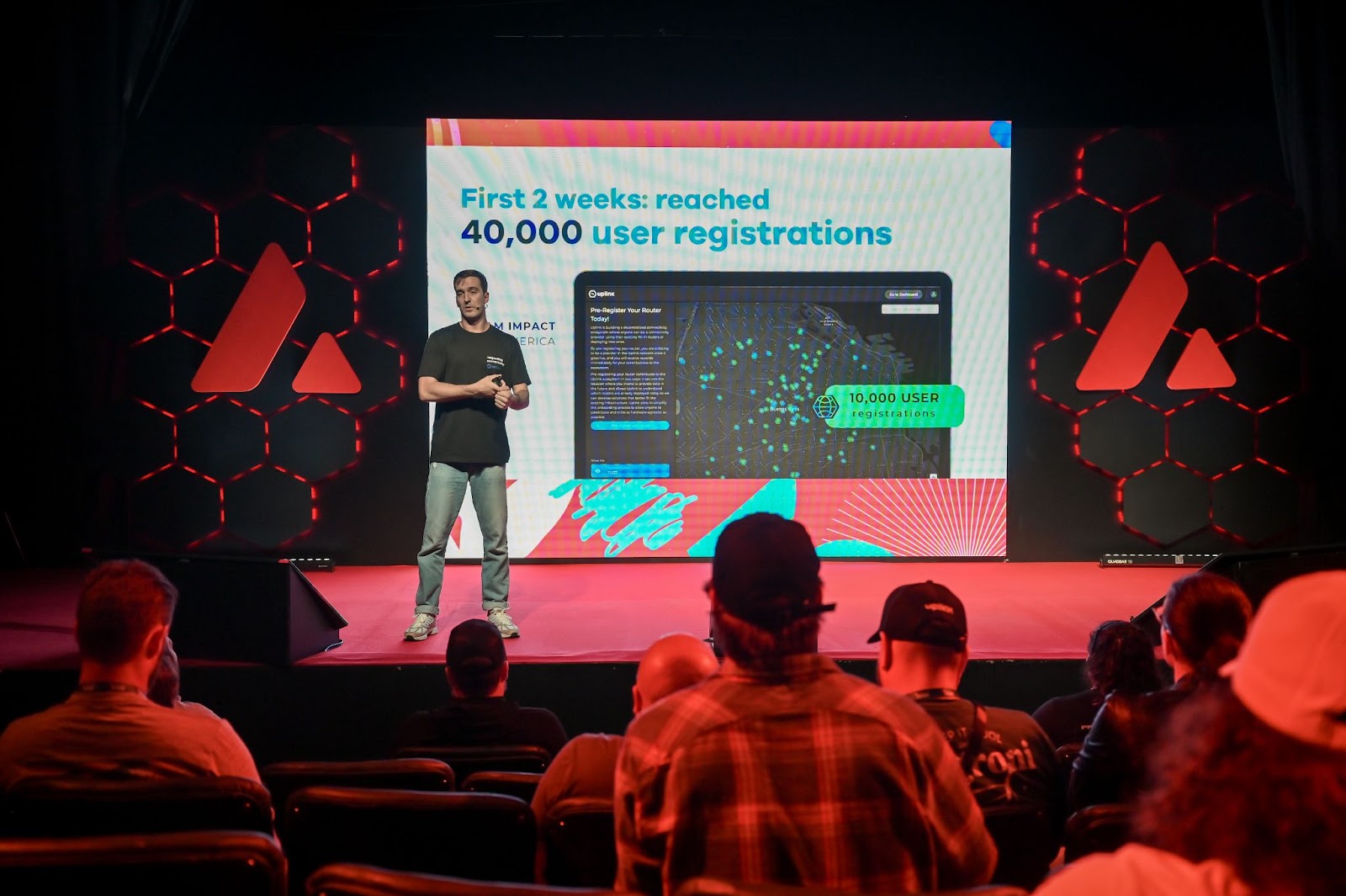
Though not a DePIN project, Avalanche is a powerful case study in smart utility token design. AVAX is used for staking, governance, and gas fees—and all transaction fees are burned, reducing total supply. Avalanche also introduced subnets, custom blockchains that require AVAX to launch and maintain. This creates a consistent token sink tied to actual utility and scale.
Avalanche has faced challenges, but with the 9000 upgrade, the core model remains one of the stronger examples of embedding deflation and demand into protocol design.
What Makes Tokenomics Work? (And How Uplink is Thinking Ahead)
Across all five examples, certain patterns emerge:
- Utility > Speculation: Tokens must power real services—not just serve as rewards.
- Burns and sinks: Mechanisms that remove tokens from circulation help control inflation.
- Stake and slashing: Accountability (Filecoin, IoTeX) protects network integrity.
- Fairness: Transparent allocation and limited insider advantage build community trust.
- Match incentives to demand: Helium’s early missteps show the cost of rewarding supply without usage.
At Uplink, we’re applying these learnings to the ULX token, which will be central to our connectivity ecosystem. Our goal is to ensure that every token minted or earned reflects real-world value—whether through bandwidth shared, demand served, or trust earned. We're designing for sustainable growth, not just explosive hype.
As we move closer to launch, we'll be sharing more details on ULX’s design, in the meantime you can check out the Uplink Litepaper. Stay tuned—and thank you for being part of building a more connected, decentralized future.

%20(1).jpg)