Team Spotlight: Damaris Valero, CRO
Leadership is grit.
It’s determination. It’s knowing when to follow the rules, and when to rewrite them. Few embody this ethos more fully than Damaris Valero, Uplink’s Chief Revenue Officer. With a career that spans Universal Studios, Rightmesh, and strategic training at Harvard, Damaris brings a rare depth of experience to one of Web3’s most ambitious telecom disruptors.
In this spotlight, we trace her path from traditional media to decentralized infrastructure, and uncover the lessons she’s learned on building partnerships, navigating new frontiers, and staying sharp in a fast-moving space.
From Hollywood to Harvard to Web3
Before stepping into the world of blockchain and telecom, Damaris earned her stripes in entertainment, leading licensing and international content deals for Universal Studios and Viacom.
“Universal gave me backbone,” she says. “I learned how to negotiate, navigate complex licensing frameworks, and understand both global and local market demands.”
Those lessons shaped the next chapter of her career: founding Animus Productions, her Miami-based company that produced content for FOX, NBC, and ESPN. She also served as executive producer on MTV’s Catfish, building a hit franchise internationally.

Originally developed for U.S. audiences, Damaris saw global potential in the series. “The format worked. I knew it would resonate internationally,” she explains. Despite initial resistance, she pushed forward and brought Catfish to new markets in several countries, turning it into a global brand.
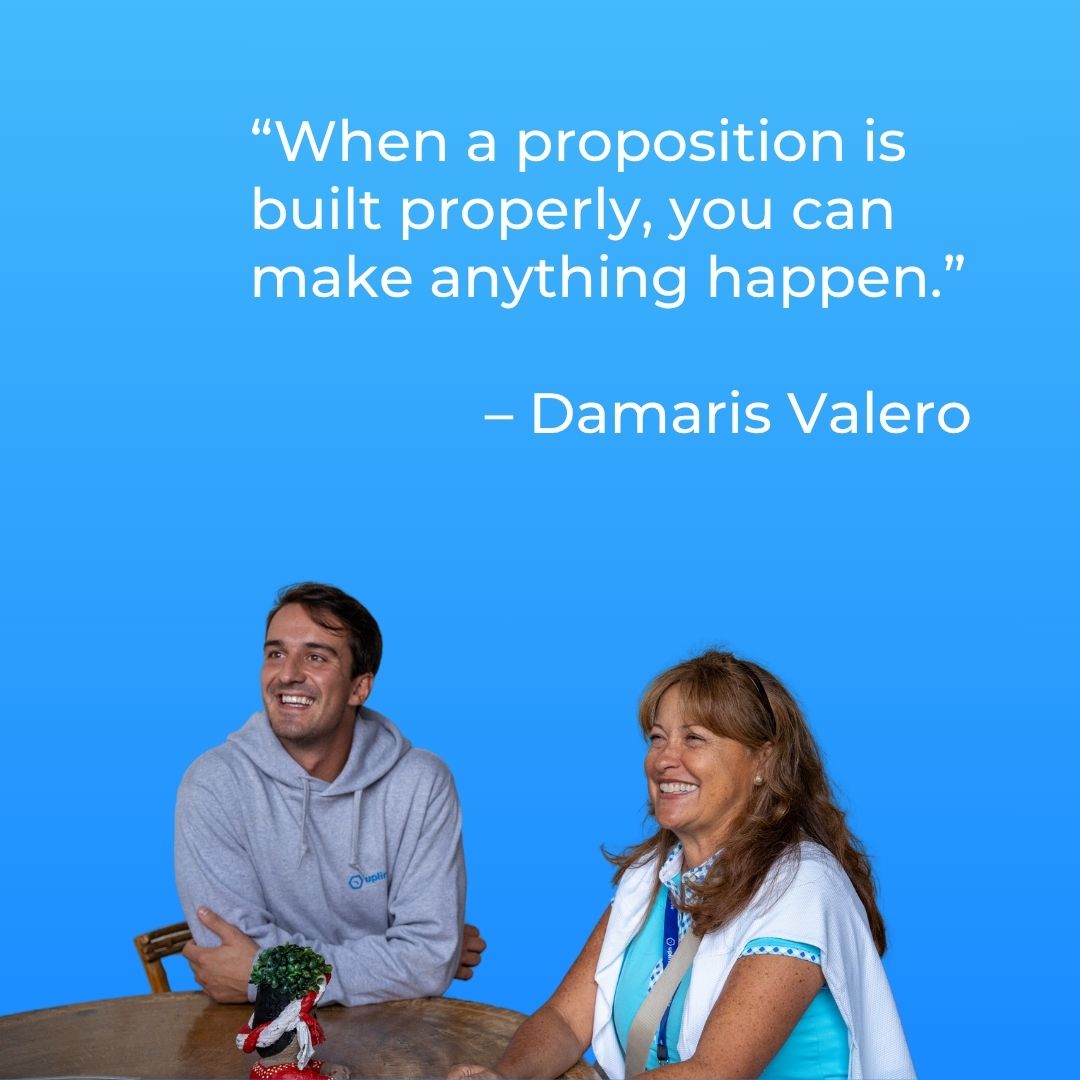
As her work scaled across borders, she became increasingly aware of the structural limitations behind the systems she was operating in. “Working with multinational brands gave me a front-row seat to how large systems work, and where they fail,” she says.
The jump from entertainment to telecom may seem like a leap, but for Damaris, it was a natural evolution. As content and communications technology became increasingly intertwined, she began thinking more deeply about what a better infrastructure could look like.
Building with Uplink
Her first encounter with blockchain came in 2017. But it wasn’t until her time at Rightmesh, a decentralized communications project, that the promise of Web3 fully clicked.
“Rightmesh was the prelude,” she reflects. “It opened my eyes to how decentralized infrastructure could solve real-world access problems.”
To Damaris, Uplink represents the next chapter: an opportunity to build something bigger.
“For a long time, telecom has struggled to meet user demand,” she says. “Towers weren’t designed for stadiums packed with people, all streaming and uploading videos. There’s always been this gap between infrastructure and how people actually use the internet.”
Uplink, and the broader DePIN movement, aim to close the growing gap of outdated infrastructure by enabling everyday users to support and strengthen digital ecosystems. This model boosts resilience, scalability, and access.
“We’re figuring it out. It’s still the wild west. But we have the roadmap and I believe DePIN will change everything in the next two to five years.”
On Leadership and Listening
What sets Damaris apart isn’t just her experience, it’s how she builds trust.
Whether she’s mentoring internal teams or brokering high-level partnerships, her leadership style starts in the same place: active listening.
“People forget that business is about people,” she says. “Before you pitch anything, you need to understand what your potential partner wants, what they’re actually trying to solve. Not just now, but in five years.” It’s a long-game strategy that reflects the lessons of past cycles.
“I’ve taken some wrong turns,” she admits. “That experience helps me guide others through the chaos of building from the ground up. You won’t get everything right the first time. That’s okay. Don't be afraid to make mistakes. Own it, and move on without forgetting the lesson. Learning quickly and build with accountability.”
What’s Next?
Damaris is bullish on the future of Web3, but realistic about the road ahead.
“Ninety percent of dot-com companies failed,” she says. “People working on tokenization in 2017 made mistakes, and they’re still figuring it out in 2025.
Her advice? “Spend five to ten minutes a day tuning into the industry. Otherwise, you’ll get left behind.”
.png)
When she’s not moving at the speed of crypto, you’ll find her on the golf course.
“Golf is one of the toughest sports I’ve ever played,” she laughs. “It’s mental, not just physical. You can have all the right tools, the right weather, the right clubs… but if your mind’s not in the right space, you won’t land it by the flag. It’s like Web3– you have to practice and reflect to stay sharp.”
.jpg)